
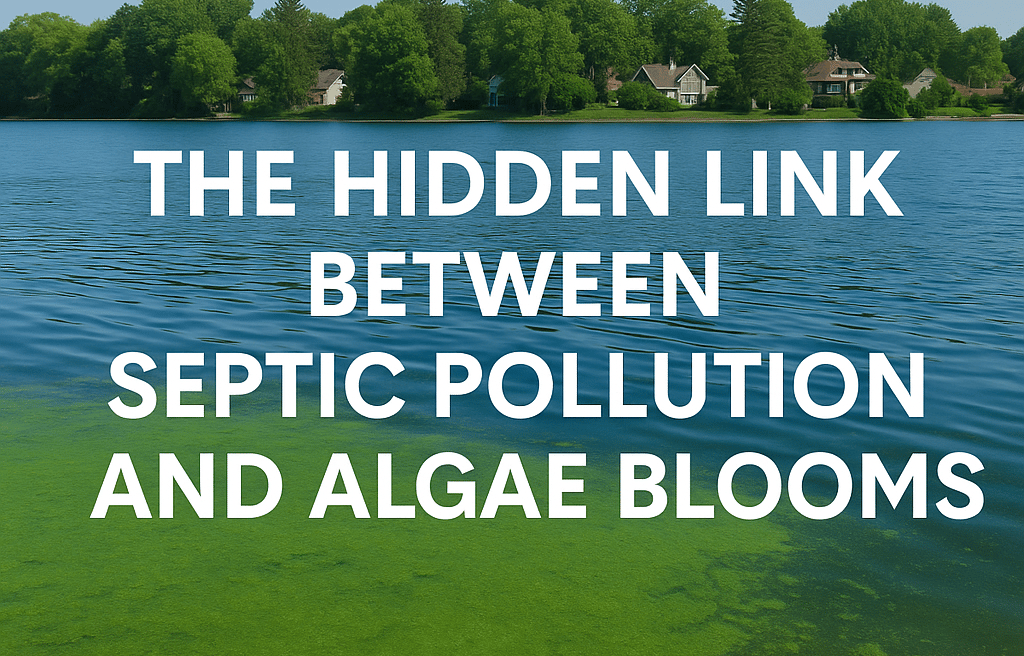
The Hidden Link Between Septic Pollution and Algae Blooms
The good news is that algae blooms caused by septic pollution are preventable.
Bob Chillds
11/2/20252 min read
The Connection You Can’t See but Need to Know
When you think of algae blooms, those thick, green layers that sometimes cover lakes and ponds, you might picture fertilizer runoff or industrial waste as the main culprits. But one of the biggest hidden contributors is often much closer to home: failing septic systems.
Across rural and lakeside communities, septic pollution quietly seeps into groundwater and surface water, releasing excess nutrients like nitrogen and phosphorus. These same nutrients feed algae growth, turning clear waters into murky, oxygen-deprived ecosystems that threaten wildlife, recreation, and drinking water alike.
How Septic Pollution Fuels Algae Blooms
A properly functioning septic system treats wastewater underground before it reaches natural water sources. But when a tank leaks, overflows, or becomes saturated, it releases untreated or partially treated wastewater into the surrounding soil.
This water often contains high levels of nutrients and bacteria, which move through groundwater or runoff into nearby streams and lakes. Once there, these nutrients act as fertilizer, supercharging algae growth. The result: green scum on the surface, foul odors, dying fish, and degraded water quality that can take years to restore.
The Ripple Effect on Health and Environment
The danger isn’t just aesthetic. Certain algae blooms, known as cyanobacteria or “blue-green algae,” can produce potent toxins harmful to humans, pets, and wildlife. These toxins can cause skin irritation, respiratory problems, and serious liver damage when ingested.
Beyond health risks, algae blooms disrupt aquatic ecosystems by blocking sunlight, depleting oxygen, and killing fish and plants. For homeowners near affected lakes, the impact extends further, property values drop, and communities lose tourism and recreation revenue. What begins as one household’s unnoticed septic leak can ripple across an entire region.
Preventing Pollution Starts at Home
The good news is that algae blooms caused by septic pollution are preventable. Regular system maintenance, inspections every 3–5 years, and mindful water use can make a major difference. Simple actions — like diverting roof runoff, spacing out laundry loads, and never flushing harmful chemicals, all protect your septic system’s balance and lifespan.
At CSHEA, we’re working with homeowners, professionals, and local governments to make septic care affordable, practical, and environmentally responsible. Through community education, advocacy for smarter regulations, and on-the-ground repair programs, we’re helping stop septic pollution at the source, before it reaches our lakes and waterways.
Join the Effort
Every action counts in the fight against septic pollution and algae blooms. Whether you’re a homeowner looking to learn more, a professional seeking training, or a policymaker ready to make a difference, CSHEA welcomes you.
Report a Septic Concern – Visit CSHEA.org/contact to share environmental issues or request an assessment.
Join the Alliance – Support our mission to restore clean, healthy water across Canada.